
VIN and original brake evidence
Provide the VIN, exact model year, market, axle, wheel specification, current rotor and caliper photographs, and OEM part numbers when available.
VIN and current brake evidence
Rotor, hat and clearance geometry
Pads, calipers and axle package
C/SiC manufacturing and inspection
Written component schedule and install plan
Technical guide 12
The final chapter connects the engineered brake package to the actual vehicle. It defines the information required before production and the checks that should continue through professional installation and final inspection.
Provide the VIN, exact model year, market, axle, wheel specification, current rotor and caliper photographs, and OEM part numbers when available.
Engineering review covers caliper and wheel space, hub relationship and rear electronic parking-brake compatibility where applicable.
A qualified brake technician should manage fitting, torque, fluid, bleeding, bedding and final brake-system inspection. Installation time and road legality are not claimed universally.
OWNSILENT production stage
Materials, equipment and inspection checkpoints are organised by manufacturing stage. Dimensions and acceptance values remain tied to controlled production records.
OWNSILENT production view: finished rotor amg caliper install wide. Exact material identity, dimensions and acceptance values remain tied to controlled production records.
OWNSILENT production view: finished rotor amg caliper pads detail. Exact material identity, dimensions and acceptance values remain tied to controlled production records.
OWNSILENT production view: finished rotor hub spec label. Exact material identity, dimensions and acceptance values remain tied to controlled production records.
Frequently asked questions
No. Exact diameter, thickness, offset, hub geometry, caliper clearance, wheel clearance and rear EPB compatibility require verification.
Yes. Rotors, matched pads and approved calipers can be quoted separately when the existing brake configuration is confirmed.
Yes. A qualified brake technician should complete installation, fluid work, torque procedures, bedding and final inspection.
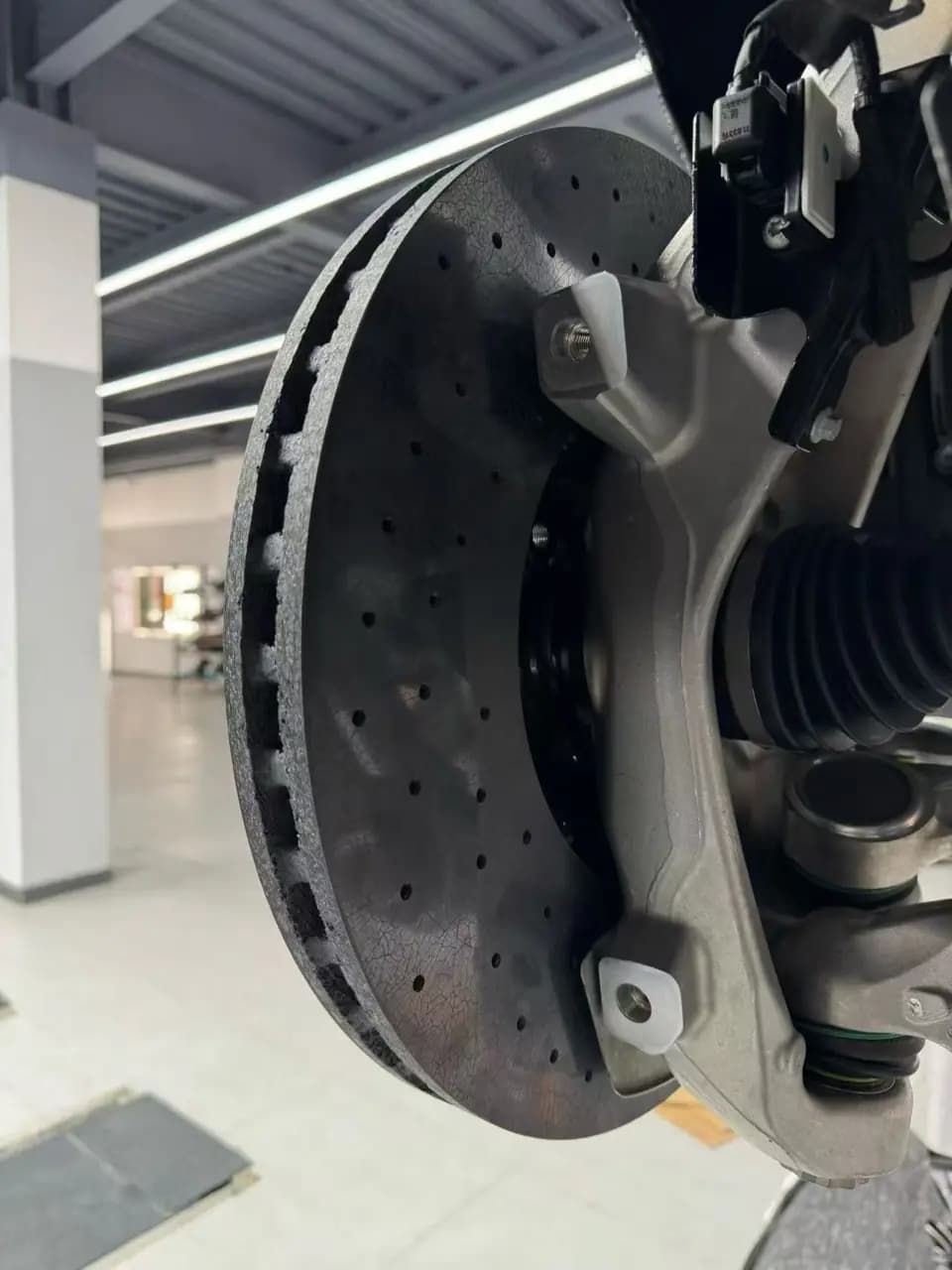
The rotor edge and mounting-area view illustrates why a disc face alone is insufficient. Send current brake photographs, part numbers, wheel details and your VIN so the proposed assembly can be assessed together.
These images illustrate the enquiry discussion. They are not a measured clearance report or an installation approval.
Review the Range Rover enquiry checklistRelated pages
Manufacturing
Manufacturing
Manufacturing
Manufacturing
Manufacturing
Manufacturing
Get In Touch
Send the VIN, model year, current brake photographs, wheel specification and required axle configuration for engineering review.
Usually replies within one business day · Handled by the OWNSILENT team
Prefer email? Reach us at sales@ownsilent.international