
Cullinan Series I
Reference specification- Chassis / series
- RR31 reference · confirm from VIN/build record
- Production
- 2018–2024 working coverage
- Generation
- Original Cullinan generation
OWNSILENT · Rolls-Royce Cullinan · Vehicle-specific C/SiC engineering
Compare an OEM-size carbon-ceramic replacement pathway with a larger front-and-rear performance package. Every production specification is released against the exact vehicle evidence—not the model name alone.
Final compatibility is confirmed using VIN, production month, OE brake details and measured wheel clearance.
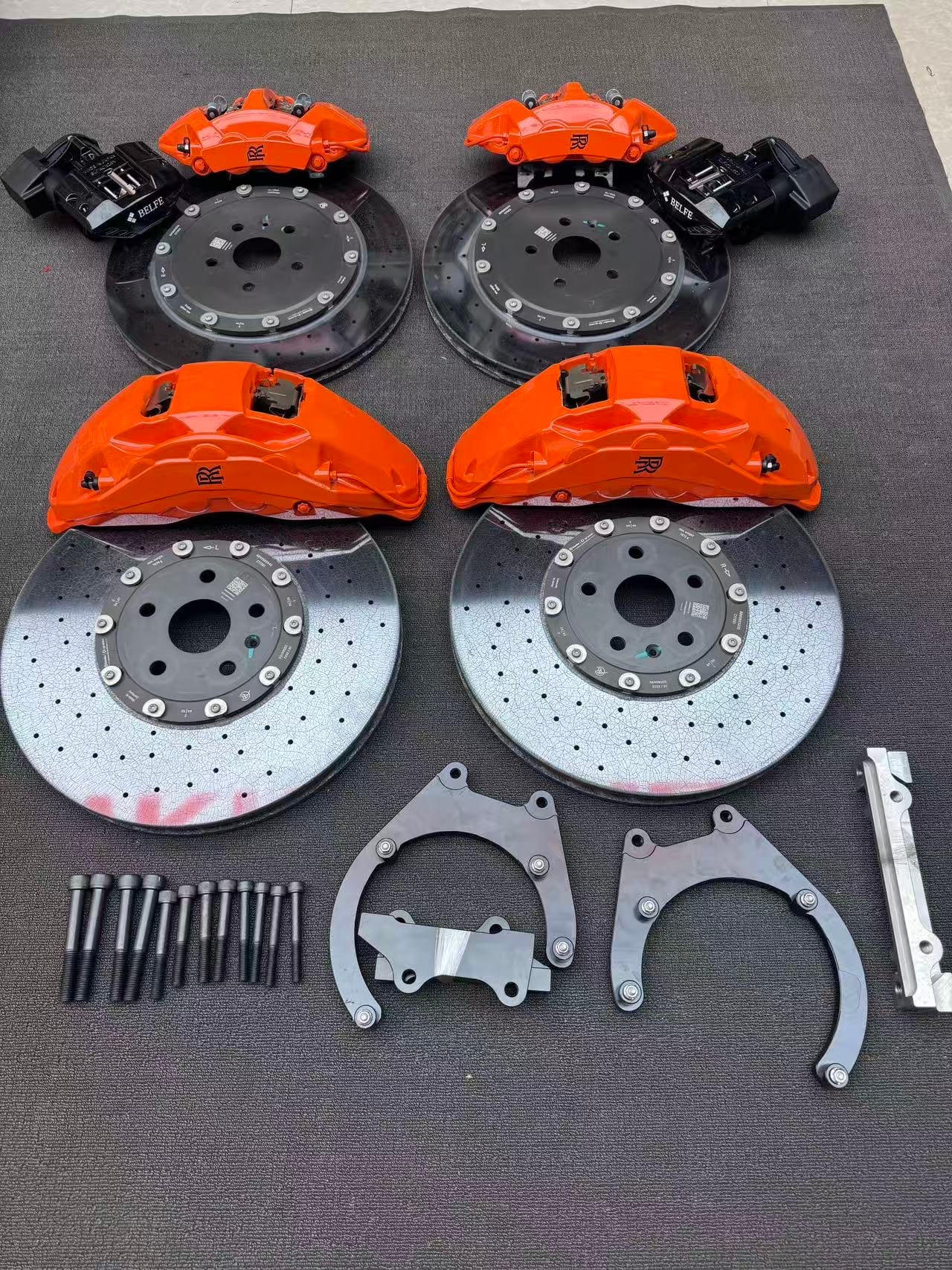
Authentic OWNSILENT Cullinan product record. Final disc, bell, caliper and hardware geometry follows the approved vehicle file.
395 × 36
front OEM-size working reference · mm
398 × 28
rear OEM-size working reference · mm
440 × 40
front upgrade reference · mm
410 × 32
rear upgrade reference · mm
Vehicle coverage
Choose the correct generation first. The vehicle record controls which dimensions and brake architecture can move into engineering review.
Rotor, caliper, pad sweep, production month and wheel package must be verified before approval. VIN, production month, factory brakes, wheel clearance and rear functions are reviewed once in the engineering step below.
Cullinan Series I and Series II
Choose one engineering pathway and one supply scope. The selection is carried into a private fitment enquiry.
Selected package
Vehicle-specific C/SiC rotor assemblies, bells and specified mounting hardware.
VIN verification required. Final geometry, wheel clearance, caliper compatibility and rear EPB are confirmed before production.
Add non-sensitive vehicle details now. VIN and photographs are requested securely during review.
Your selected vehicle, pathway and supply scope will be placed into the quotation form below.
Front and rear specification
Working references help select a pathway. Final geometry is released only against the approved vehicle record.
Why C/SiC
The customer benefit is easier to understand as a concise summary than as another long comparison table.
Potentially much lower; compare approved assembly weights
Application target can reach approximately 1,400°C; specification dependent
C/SiC friction ring is highly corrosion resistant
Can be lower with the matched compound
VIN, brakes, wheels and rear EPB
All compatibility conditions are handled here once. The written decision controls the final components and production specification.
Receive the VIN and confirm Series I or Series II, production month and regional specification.
Record the current OE rotor, caliper, pad and rear-brake arrangement. Check spoke and barrel clearance using measurements and the supplied template.
Verify rear electronic parking-brake integration and retained functions. Review rotor, bell, pad, caliper and hydraulic relationships as one system.
Issue the written fitment decision, final quotation and production specification.
Product and manufacturing record
Cullinan component records stay separate from general manufacturing references, and every caption keeps its evidence boundary.
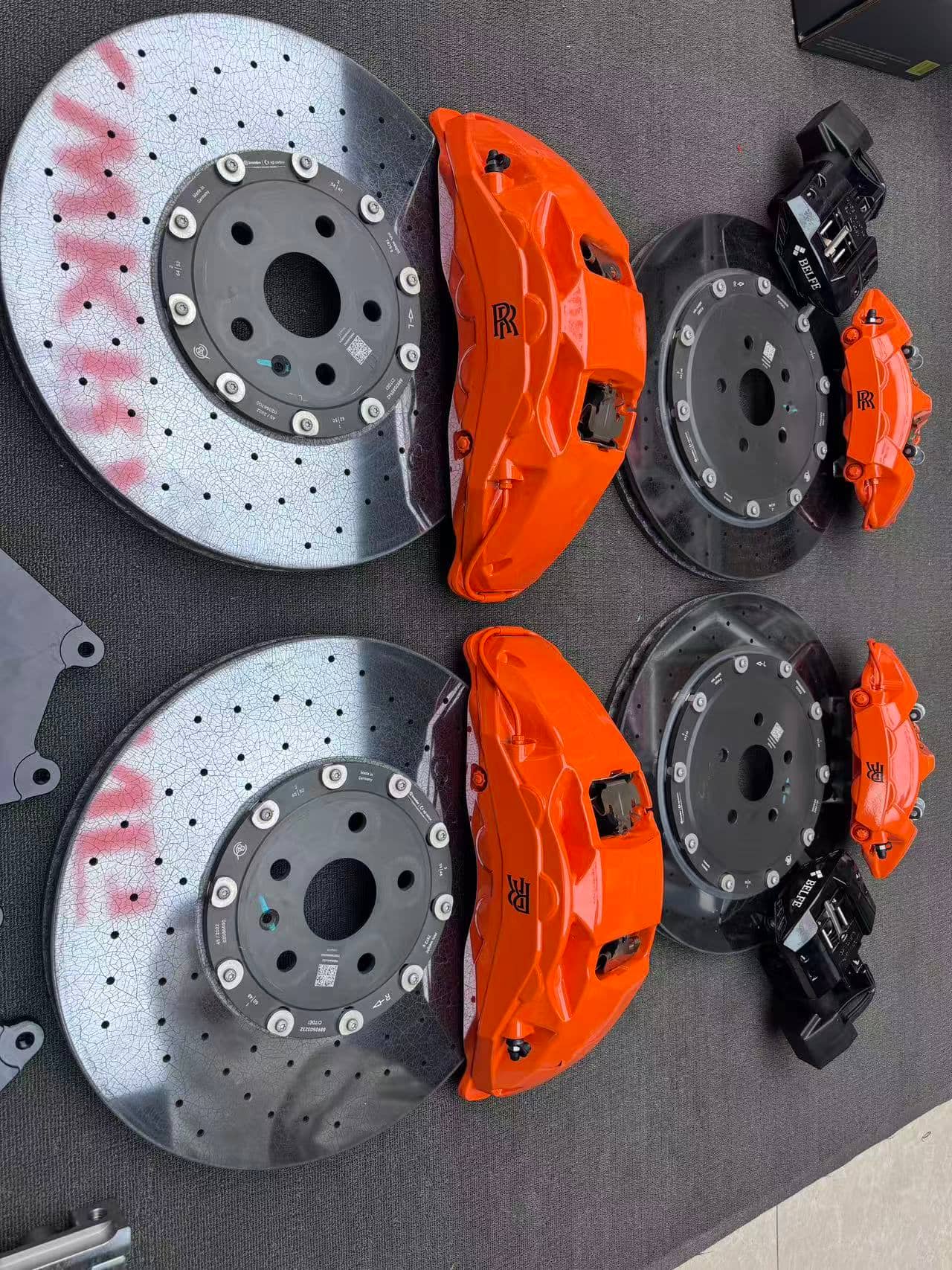
Cullinan product evidence
The component package is associated with the Cullinan record, but this frame does not prove on-vehicle installation or wheel clearance.
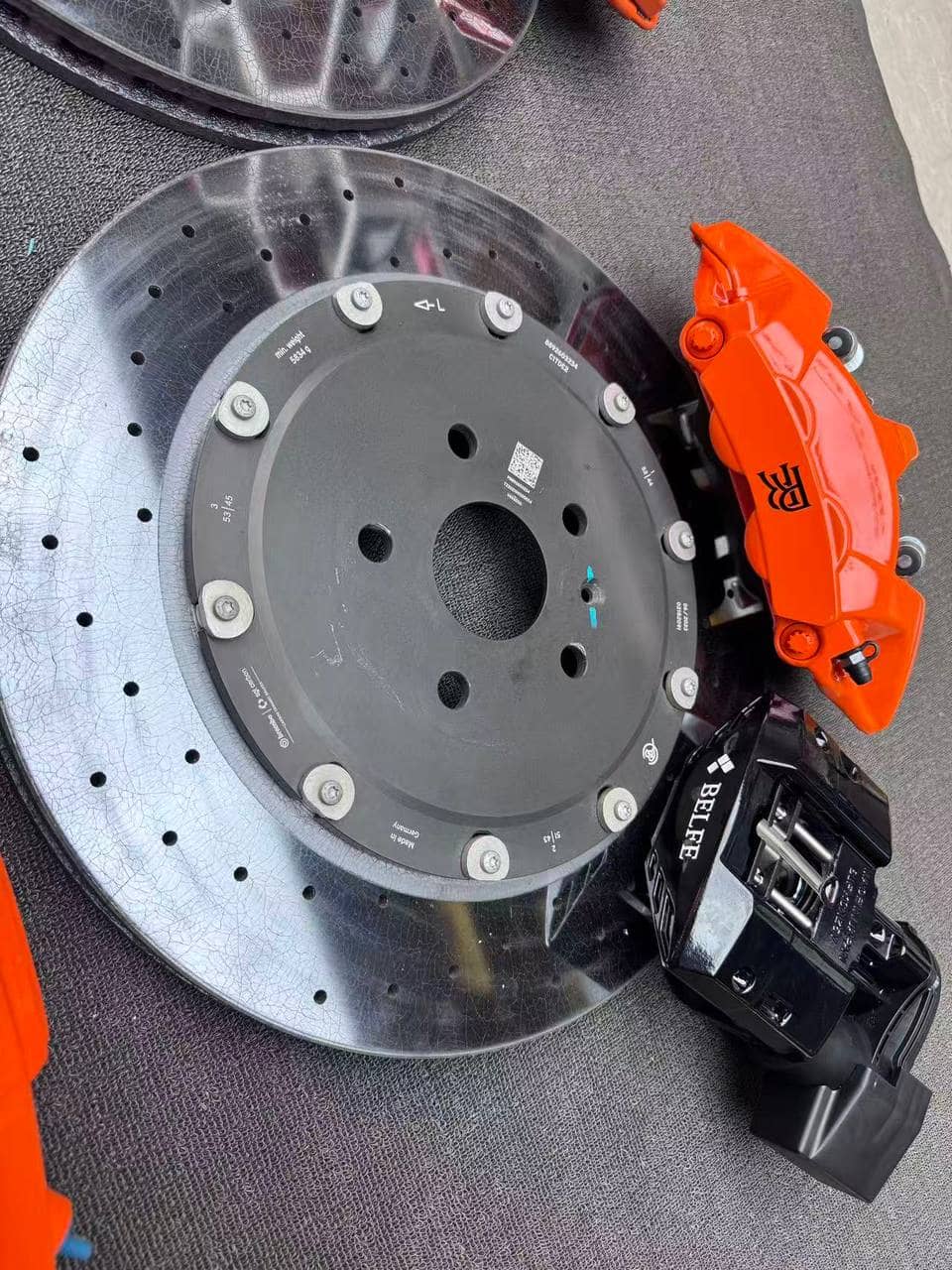
Cullinan product evidence
Cullinan product-record view of rotor, bell, bracket and mounting components. Final vehicle fitment still follows VIN and OE brake verification.
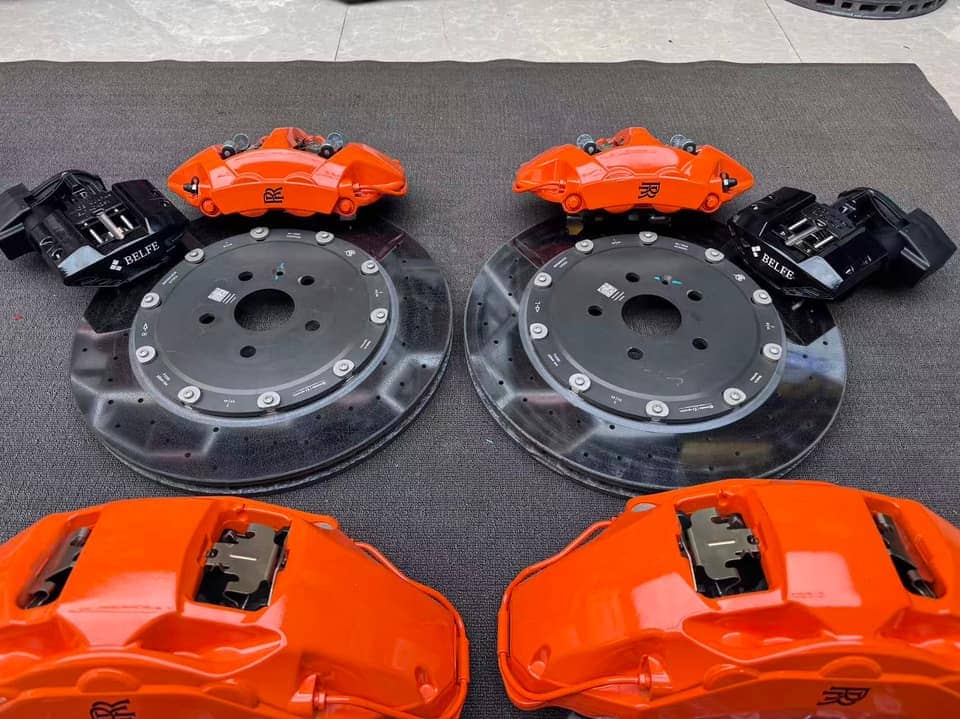
Cullinan product evidence
A close Cullinan product-record view supports component review; it is not presented as completed on-vehicle installation or wheel-clearance proof.
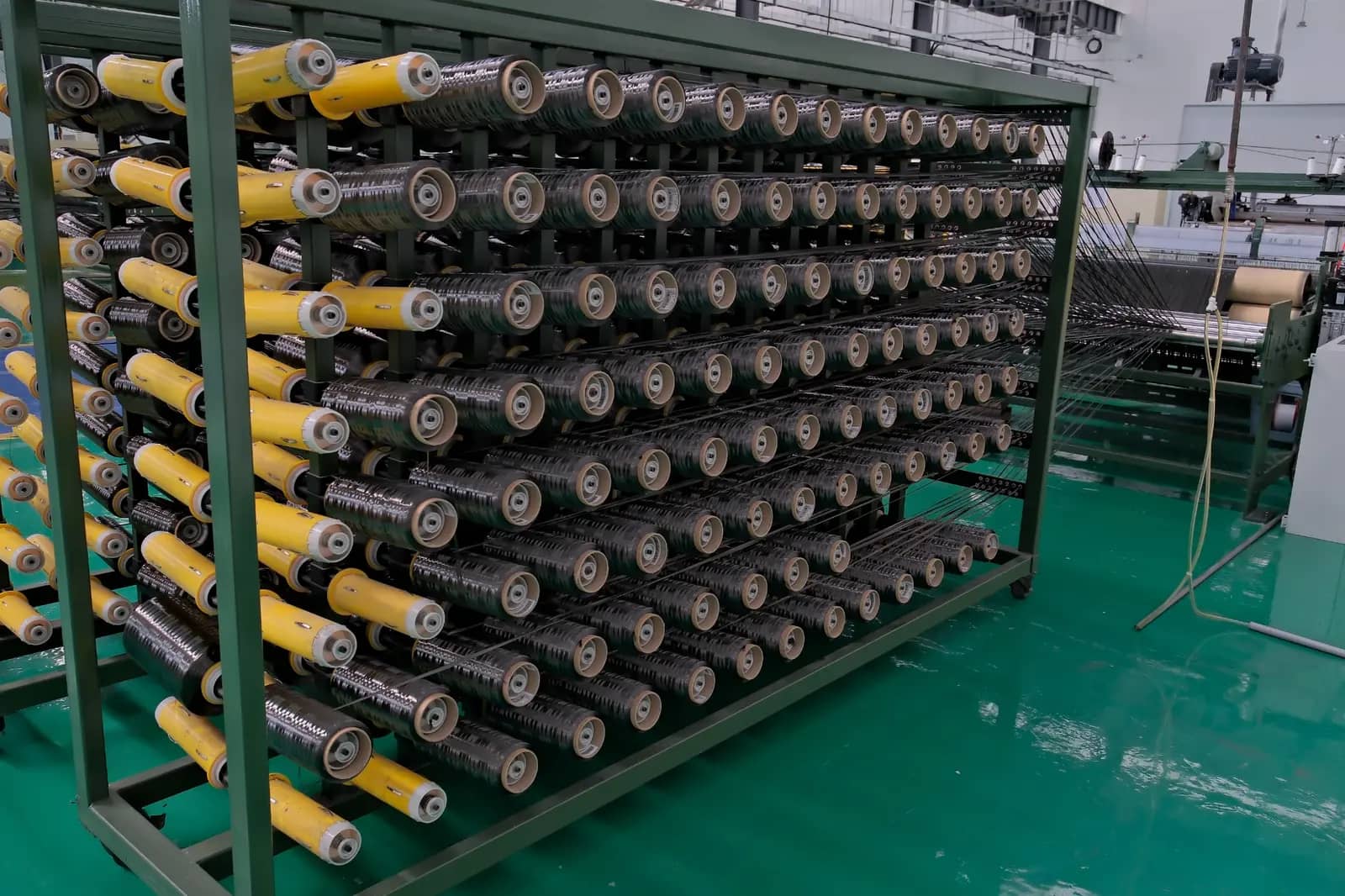
Manufacturing stage 01
Prepare and control carbon-fibre material before the rotor preform is formed.
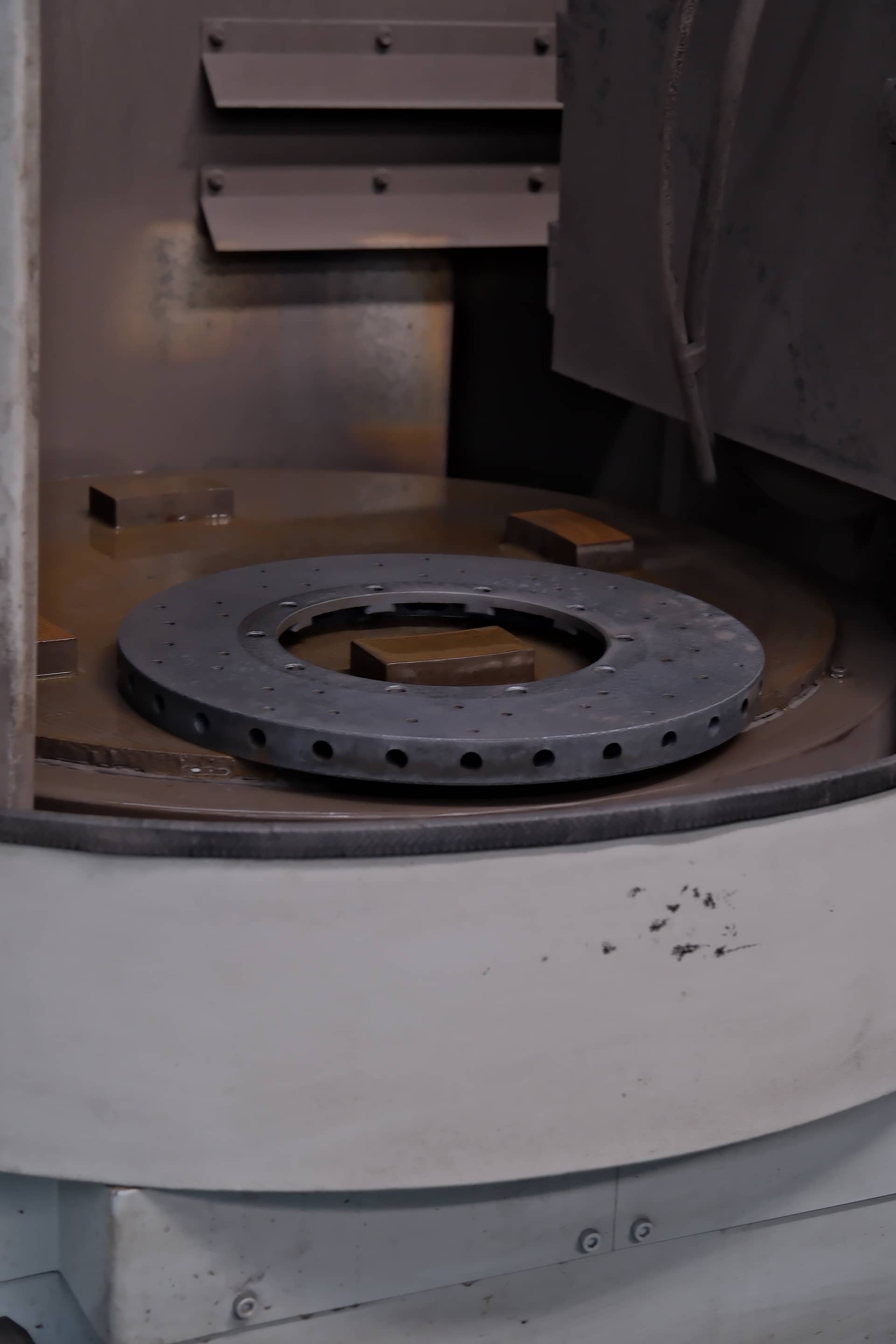
Manufacturing stage 05
Machine the approved diameter, thickness, mounting positions, ventilation and friction surfaces.
Production begins only after fitment approval and confirmation of the written component schedule.
Protective export packing with air or sea freight options to the confirmed destination.
A qualified brake technician must complete installation, fluid work, torque, runout and clearance checks.
Rolls-Royce brake applications
Every application keeps its own production years, evidence status and engineering boundary. Quotation applications and development reviews are labelled separately.
Cullinan-specific FAQs
Six focused answers cover the generation, factory-caliper, wheel-clearance and rear-EPB decisions.
Series I is within the working application scope, but compatibility is not approved by model year alone. VIN, production month, OE brake arrangement and wheels must be reviewed.
It must not be assumed to be the same. Series II receives a separate VIN, OE reference, wheel and rear-EPB review before any dimension is approved.
The OEM-size pathway may retain factory calipers when geometry, pad sweep, hydraulic relationship and condition pass the technical review.
That depends on the approved rotor and caliper envelope. The larger package requires a wheel-barrel and spoke-clearance template before production.
The review uses wheel diameter, width, offset, barrel and spoke measurements together with a package-specific clearance template.
The approved rear package is designed around the confirmed EPB arrangement. It is not released until retained operation and required components are recorded.
Related pages
Application
Application
Application
Application
Application
Application
Request Cullinan Brake Quotation
Send the generation, model year, wheel details, current brake photographs, destination and preferred package. VIN and production month are confirmed privately during engineering review.
Usually replies within one business day · Handled by the OWNSILENT team
Prefer email? Reach us at sales@ownsilent.international