
















































Interior Patterns, Perforation and Quilting
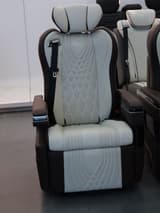
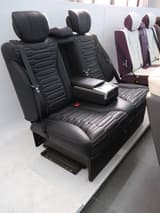
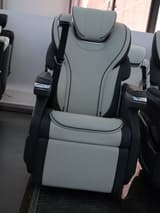
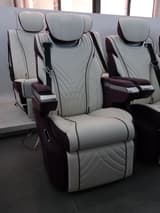
Pattern scale and stitch direction can change how an interior surface reads across a seat centre or panel insert. Physical references make those choices easier to review before the selected design is applied to full components.
sales@ownsilent.internationalVehicle details, supplied components and final materials are confirmed for your project before production.

What these components do
Sets the visible surface language that can connect seating centres, inserts and other specified upholstered areas.
- Stitched insert context
- Shows pattern within a component shape while the exposed backing and mounting edges still identify the assembly stage.
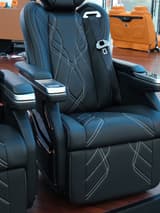
- Scallop and perforation references
- Compare the motif repeat and perforation spacing across the sample surfaces.
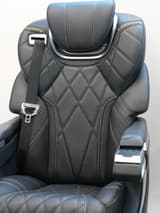
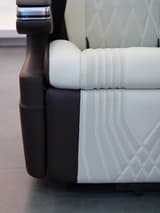
- Diamond stitching and perforation
- Shows another visible geometric direction for the upholstery surface.
- Angular stitched reference
- Offers an alternative geometric layout for comparison.
Your guide to this page.
See the pattern on a component
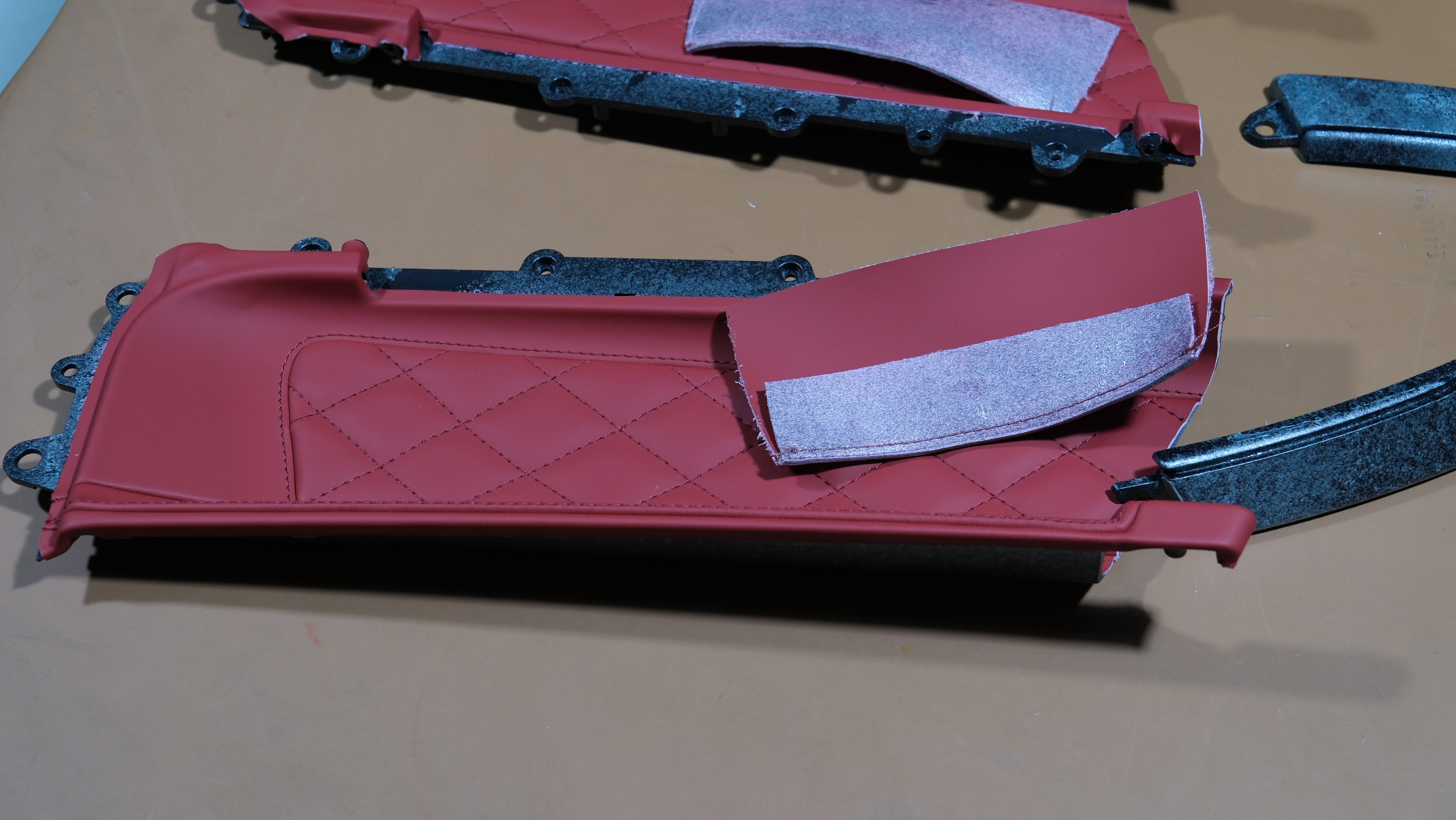
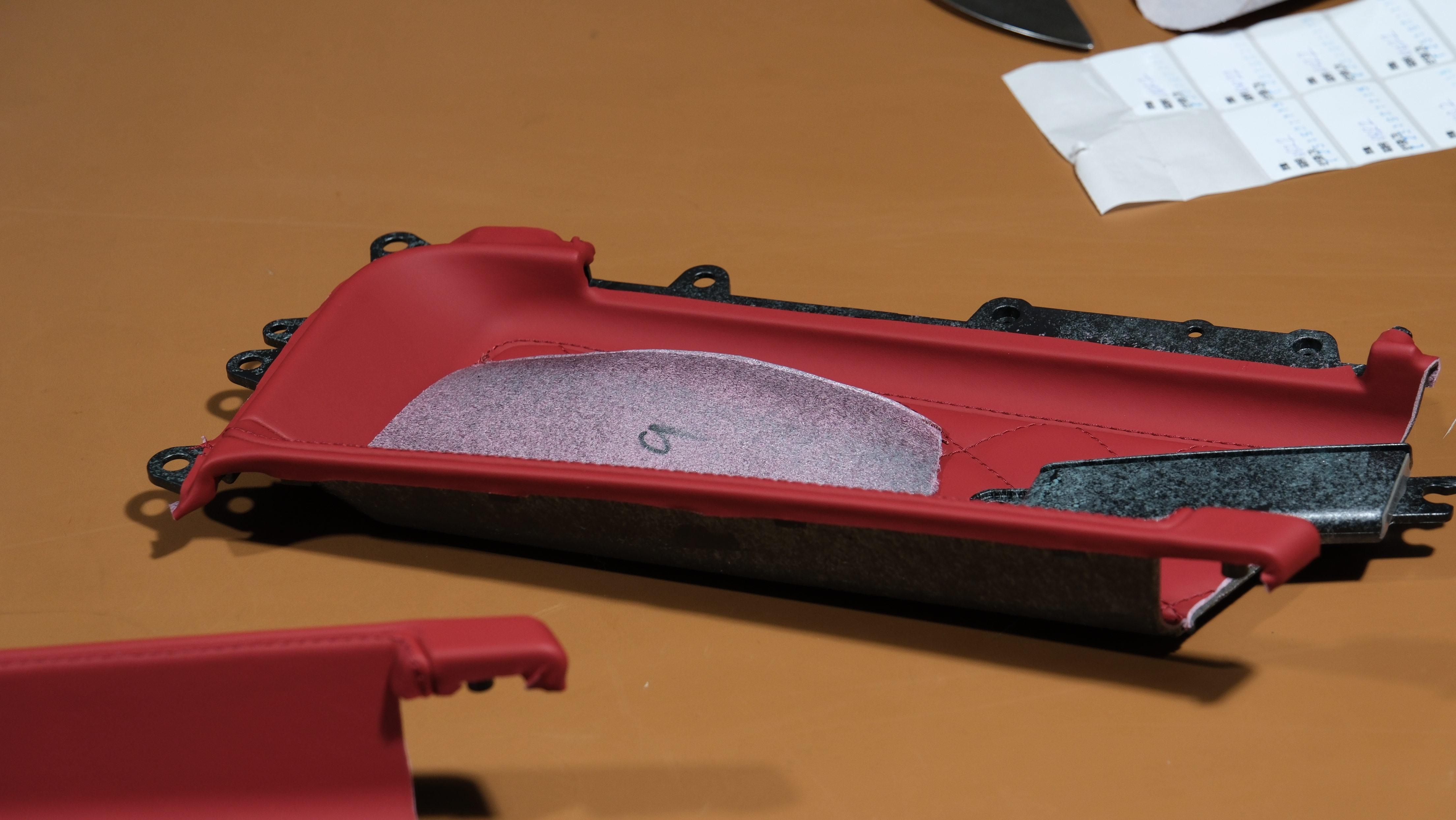
Diamond-stitched trim insert with exposed backing
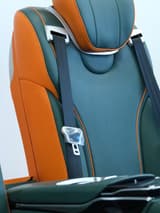
The partly finished burgundy/red stitched inserts introduce pattern direction inside a shaped component boundary. Exposed backing and mounting edges place these views in component development before final assembly, helping the visitor understand both the design and its production stage.
Compare the repeat and perforation
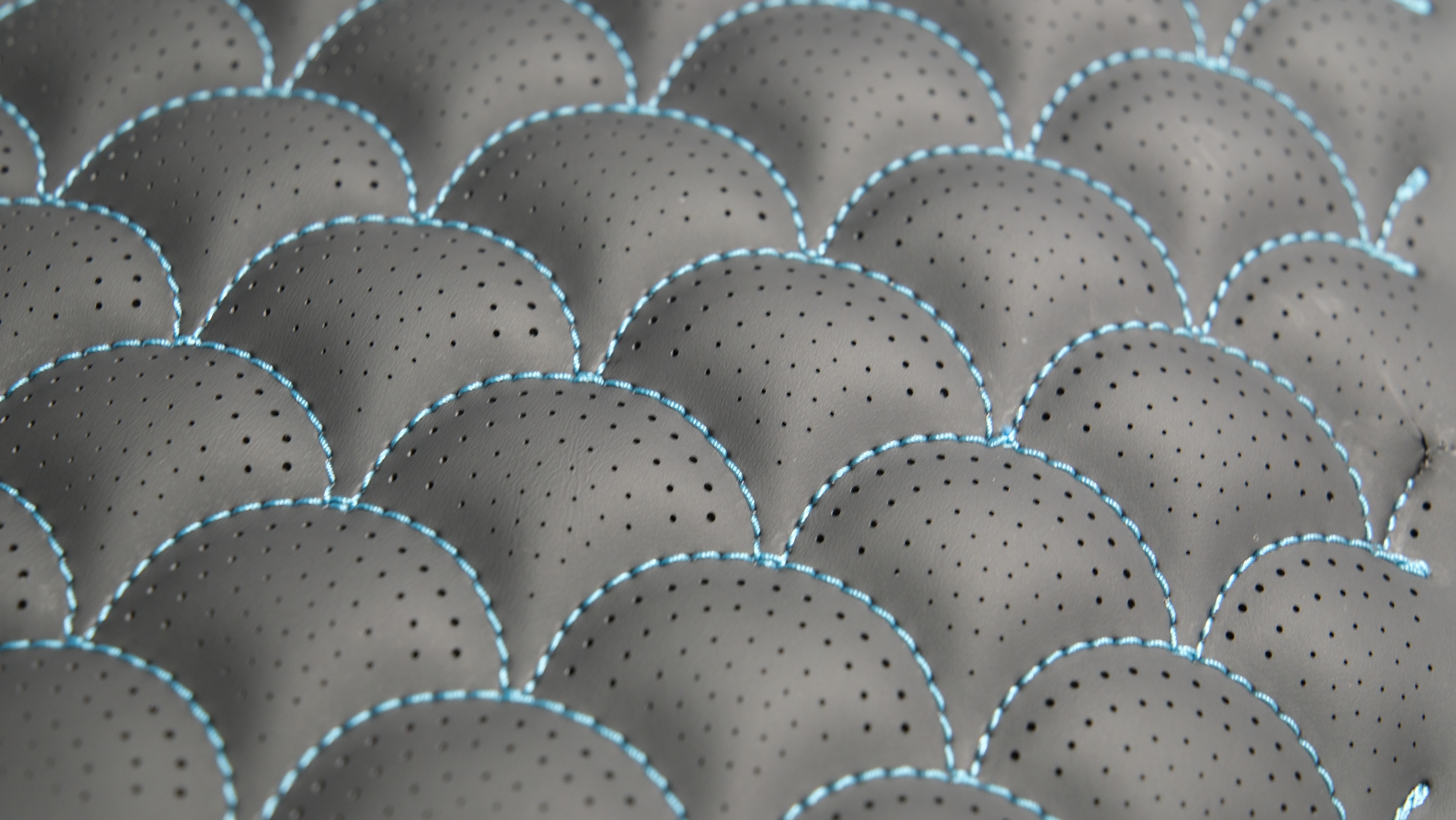
Blue scallop stitching and perforation
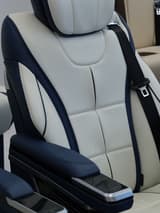
These physical references vary the visibility of the scallop geometry, perforation rhythm and contrast thread. Close and wider samples let the same pattern be considered both as a local detail and as a repeat across a larger panel.
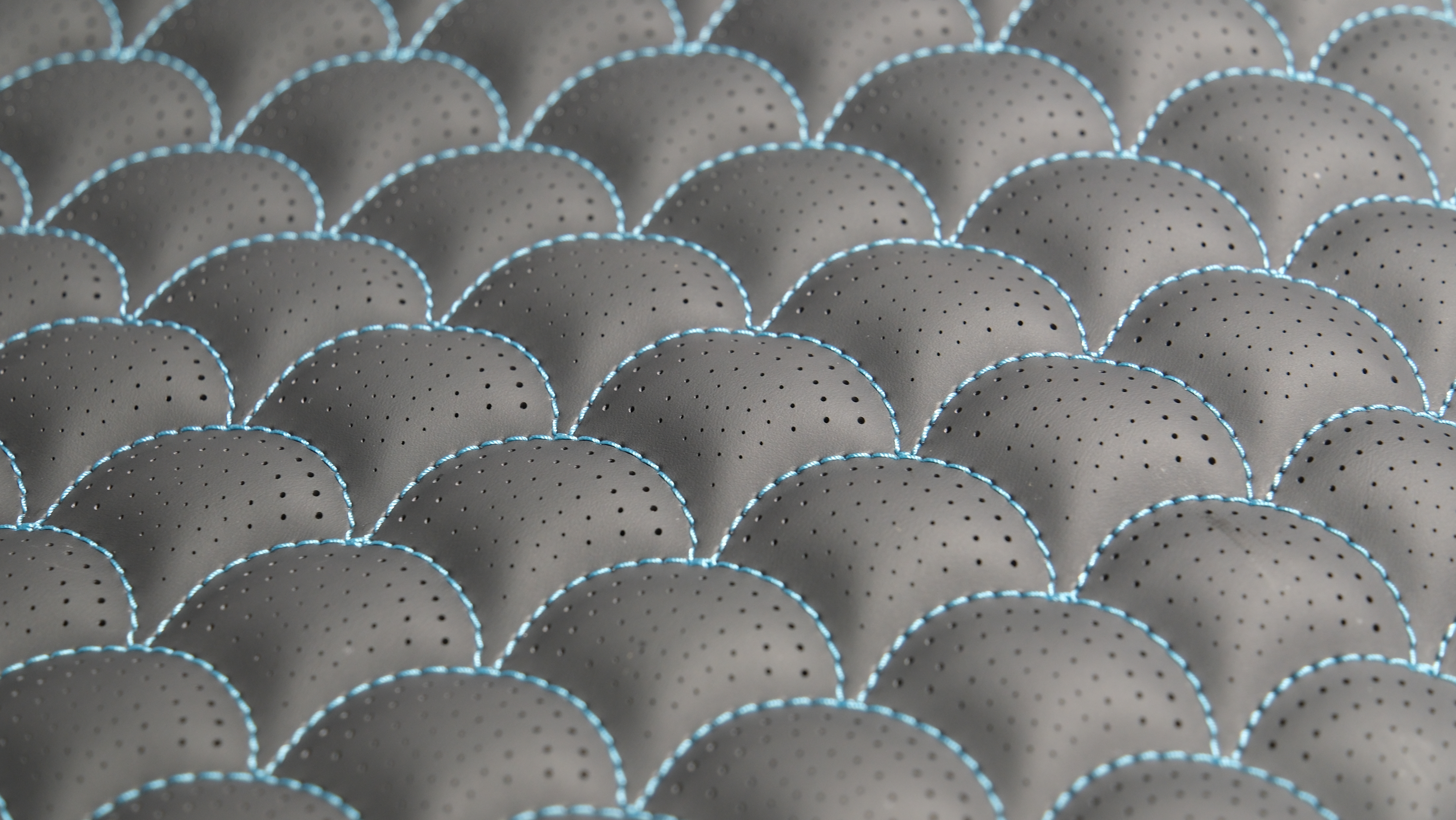
Compare the repeat and perforation
Scallop stitching across perforated upholstery
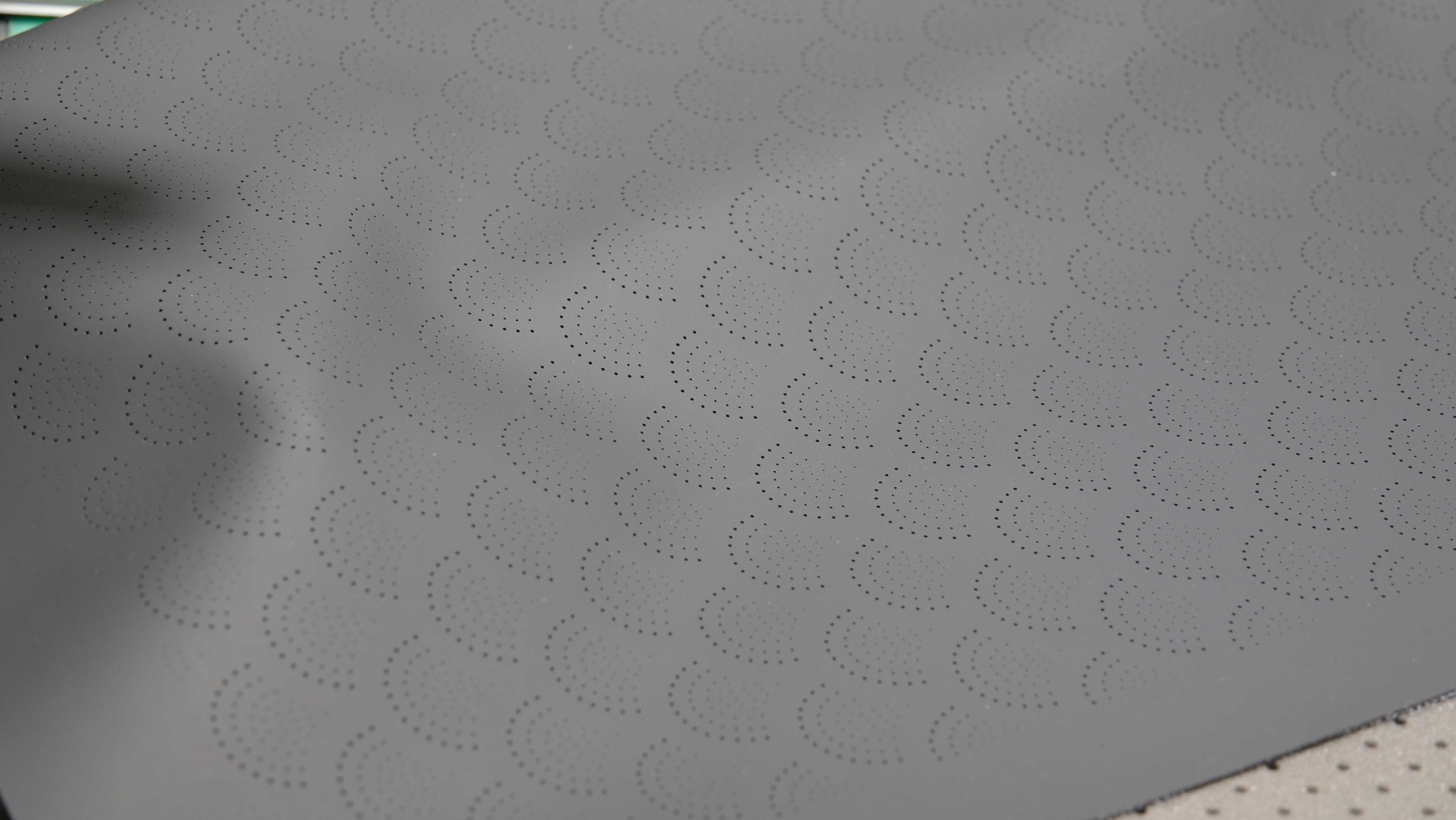
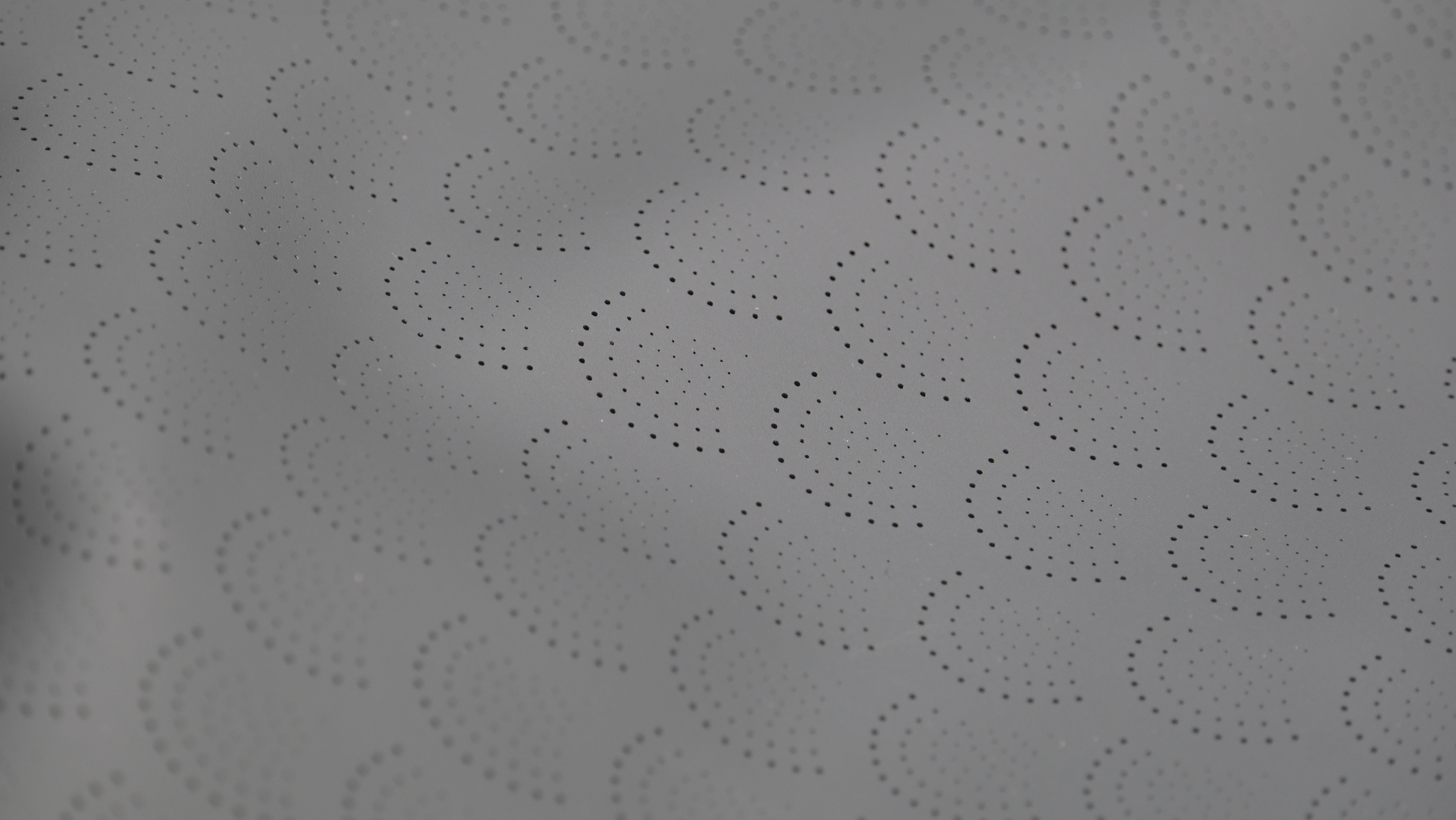

Choose a different pattern direction
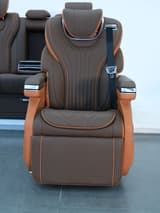
Orange double-stitch intersection
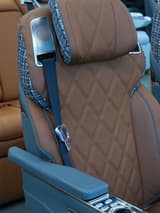
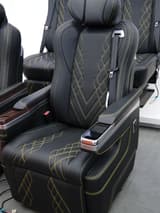
Orange diamond-patterned and angular stitched surfaces introduce different geometric directions. Compare the pattern, colour and visible perforation together before the design is approved for a component.
Details before you decide
Design & component details
Sets the visible surface language that can connect seating centres, inserts and other specified upholstered areas.
Vehicle fitment & original functions
- Vehicle details
- Brand, model, manufacturing year, market specification, VIN, current cabin dimensions and steering position.
- Component scope
- The supplied parts, reused original parts, retained openings, controls, mounts and adjoining trim are identified in writing.
- Material approval
- Colour, grain, perforation, quilting, piping, thread and any logo treatment are confirmed against available physical references.
- Interfaces & functions
- Displays, vents, speakers, switches, wiring, sensors and mechanical functions remain part of the engineering review.
- Visual coordination
- Panel divisions, stitch direction, edge transitions and front-to-rear relationships are reviewed as one cabin programme.
Specification, inspection & installation
Confirm what is included around patterns and quilting, what remains original and which connected components must share the same design direction.
Record colour, material, pattern, stitch, piping, logo treatment and interface requirements before production work is authorised.
Review the completed work through the quality inspection record, protect it for shipment and complete professional installation with functional checks where required.
More related interior pages
Related pages
Continue through the OWNSILENT knowledge graph
Manufacturing
Component Staging, Production Racks and Export Packaging
Manufacturing
Door-Panel Backing Structures and Interfaces
Manufacturing
Dashboard Trim Assembly and Interface Openings
Manufacturing
Door-Panel Reverse Assembly, Wiring and Electronic Interfaces
Manufacturing
Interior Door-Panel Structure Preparation
Manufacturing
Interior Fascia, Door Panels and Component Staging
Bring these details to your enquiry.
- Which component will receive the pattern and at what scale?
- What perforation spacing, stitch direction and thread contrast is requested?
- What material, colour and current production availability are approved?
Questions & answers
Is this a fixed package specification?
No. Component scope, colour, material and surface finish are confirmed for each vehicle-specific order.
How is vehicle compatibility checked?
OWNSILENT reviews the exact brand, model, year, market specification, VIN, steering position and original-cabin dimensions before accepting a vehicle-specific order.
Are all displayed materials confirmed as leather?
No. Exact material identity, grade, origin and application must be recorded in the official quotation and material approval sheet.
Can the selected design be changed?
Yes. Available colour, perforation, quilting, stitching, piping, embroidery and supporting trim directions are reviewed during design approval.
Why are several component details included?
Each selected detail records a useful difference in patterns and quilting, such as overall form, side profile, working access, interface openings, adjoining components or visible finish.
Will original vehicle functions remain operational?
Required controls, wiring, sensors, displays, speakers, seat functions and mechanical interfaces are identified during engineering review. Exact retention and any diagnostic or coding requirement must be confirmed for the individual vehicle.
Who should install the completed parts?
Professional installation is recommended. The installer should verify mounting, electrical connections, retained safety systems, clearances and component operation before the vehicle is returned to use.
How is the completed order prepared for delivery?
Visible finish and component condition are reviewed before protective packing. Shipping method, insurance, destination requirements and installation responsibility are confirmed in the order documentation.
Start with your vehicle
Tell us your vehicle, the components you need and the finish you have in mind. Open a photo to include that specific detail in your enquiry.
Usually replies within one business day · Handled by the OWNSILENT team
Prefer email? Reach us at sales@ownsilent.international