
OWNSILENT production · Carbon-ceramic brakes
How Carbon-Ceramic Brake Rotors Are Made
OWNSILENT manufactures VIN-engineered C/SiC carbon-ceramic brake rotors, matched pads and optional forged calipers. These photos follow the rotor from raw carbon fibre to a measured, machined part.
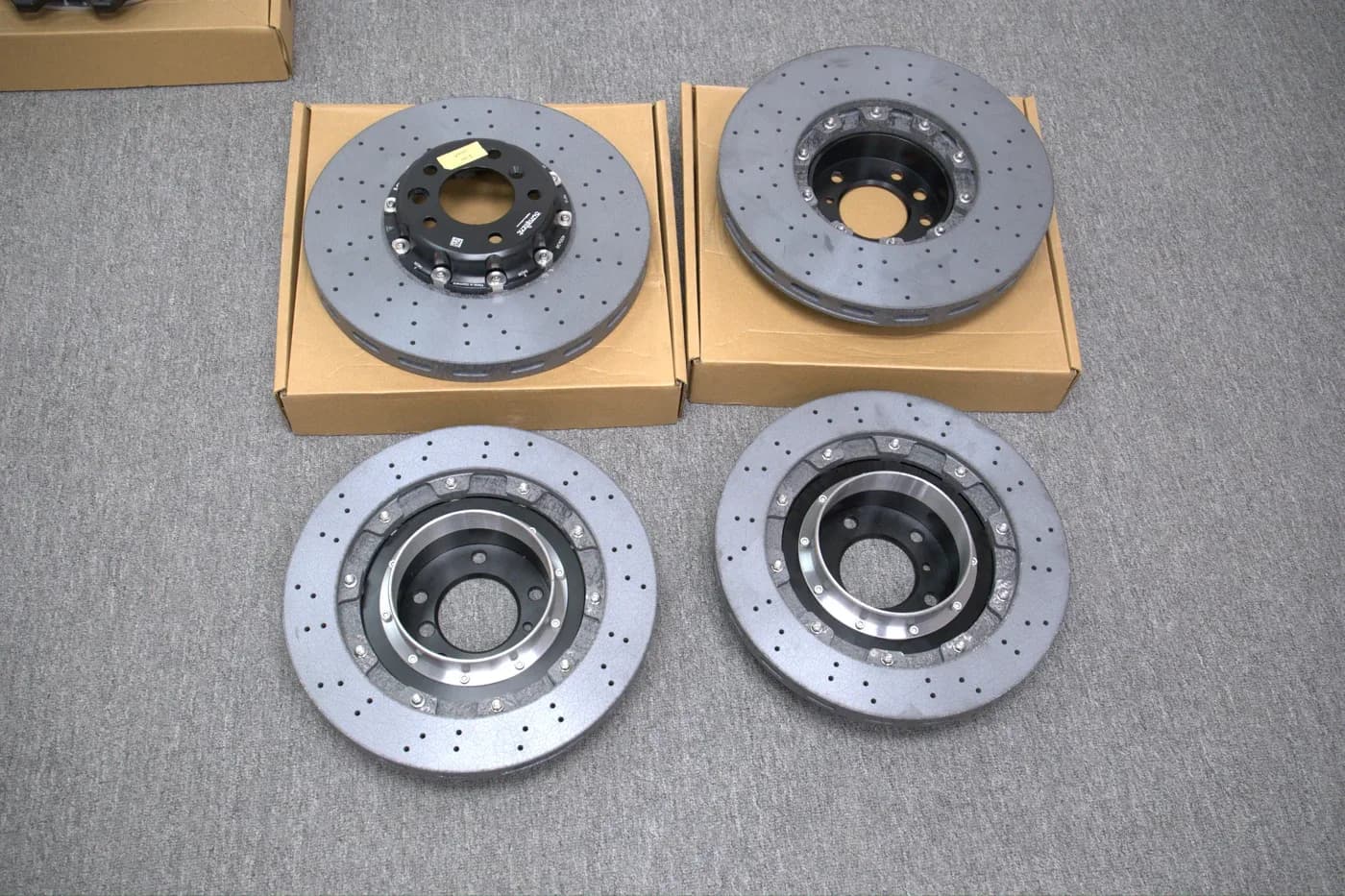
From carbon fibre to finished rotor

Step 1 · Raw fibre
Carbon fibre on the creel
Rows of carbon fibre spools sit on a creel rack, each feeding a strand towards the textile line.

Step 2 · Textile line
Tows become wide sheet
Parallel carbon tows run across the machine's rollers to form broad material.

Step 3 · Sheet preparation
Aligning the carbon sheet
Technicians align the layered sheet on the table before it is cut to specification.

Step 4 · Ring formation
A ring-shaped blank
A single ring-shaped blank rests on layered sheet, with stacks of blanks behind it.

Step 5 · Production control
Preforms grouped by size
Stacks of different diameters sit on separate pallets, labelled by size group and stage.

Step 6 · Close up
Layered, fibrous edges
Stacked close together, the blanks show the fibrous layers along their edges.
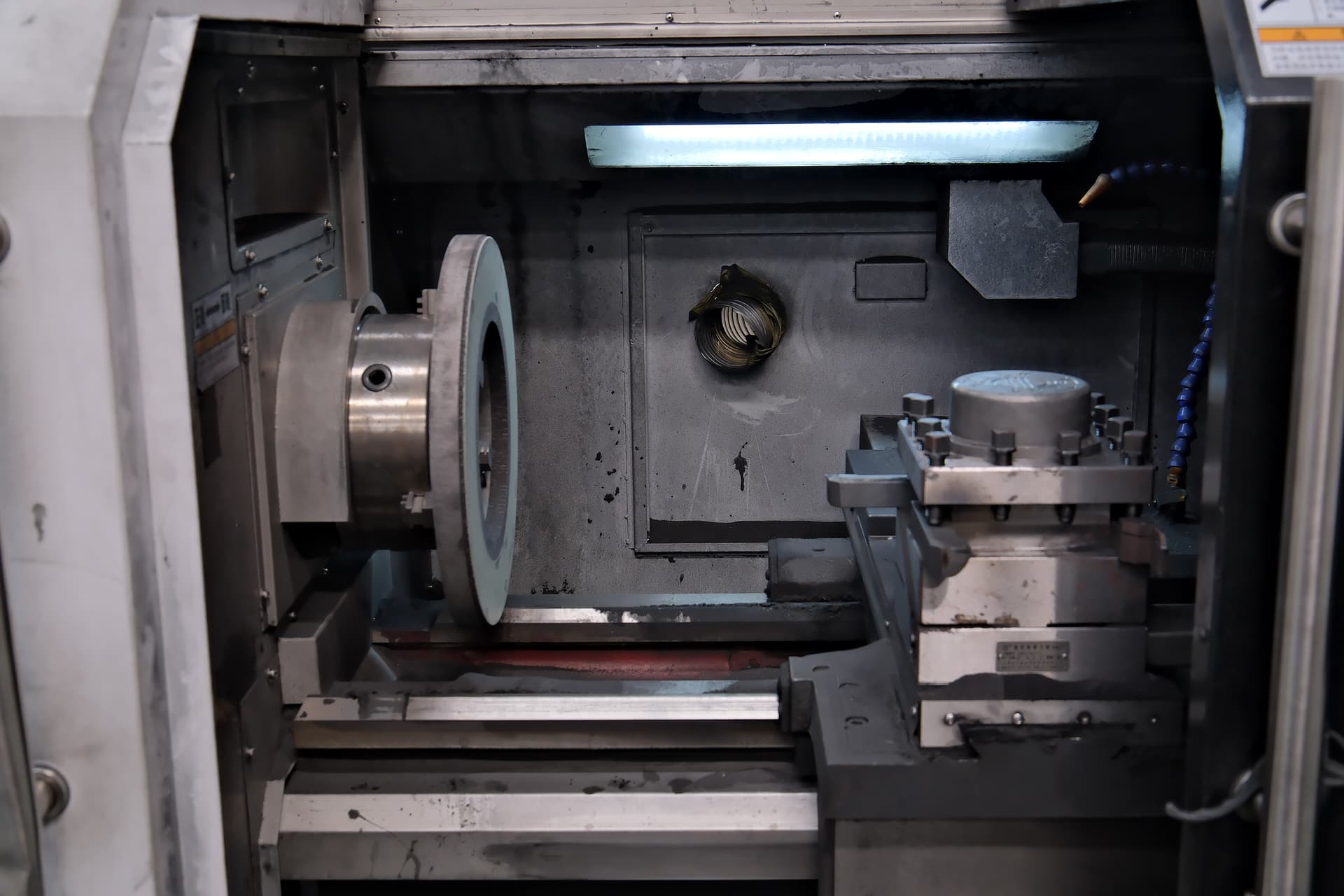
Step 7 · Machining
Clamped in the lathe
A ring-shaped blank is clamped inside the enclosed lathe, ready for machining.
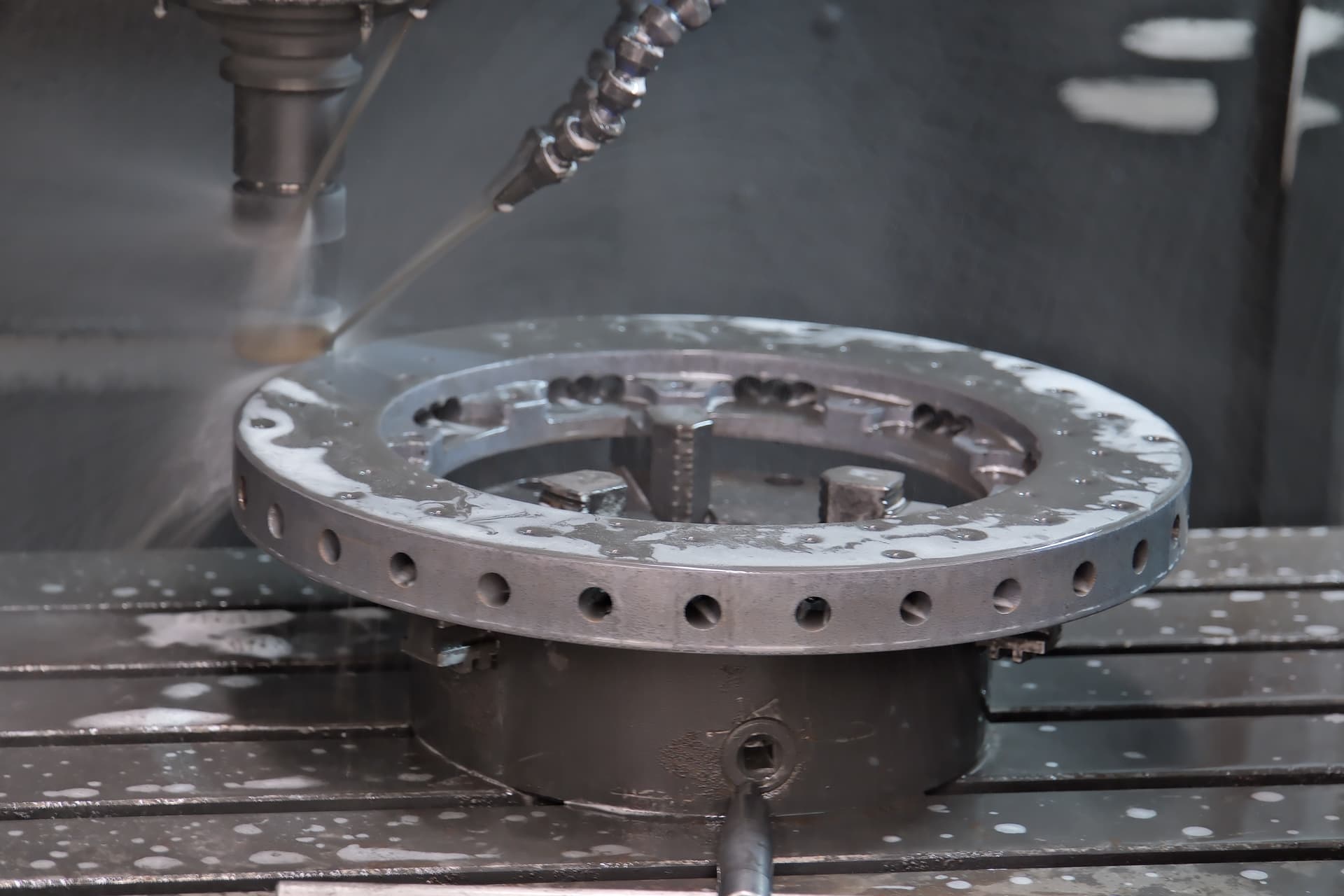
Step 8 · Machining
Drilling the rotor face
A CNC head drills the blank under coolant; hole count and spacing follow the drawing.

Step 9 · Workshop
A large ring by hand
A technician lifts a large, undrilled ring beside the workshop machinery.
Built for your exact vehicle
Send your VIN; we confirm rotor size, hat, offset and parking-brake fit before quoting. Rotors, pads and forged calipers are quoted for the exact vehicle and axle.
Or email sales@ownsilent.international
Questions before you order
- Why does OWNSILENT need the VIN?
- A model name does not confirm rotor thickness, offset, centre bore, hat depth, caliper clearance, wheel clearance or rear electronic parking-brake specification.
- Can I order only rotors, pads or calipers?
- Yes. Rotors, matched pads and approved forged calipers can be quoted separately after the existing brake system and required axle are verified.
- What sizes are made?
- Typical front diameters span 380–440 mm and rear diameters 350–410 mm, but thickness, offset, hat geometry and parking-brake compatibility are approved for the exact vehicle.
- Who should install the brakes?
- Installation, torque procedures, brake-fluid work, bedding and final inspection must be completed by a qualified brake technician.